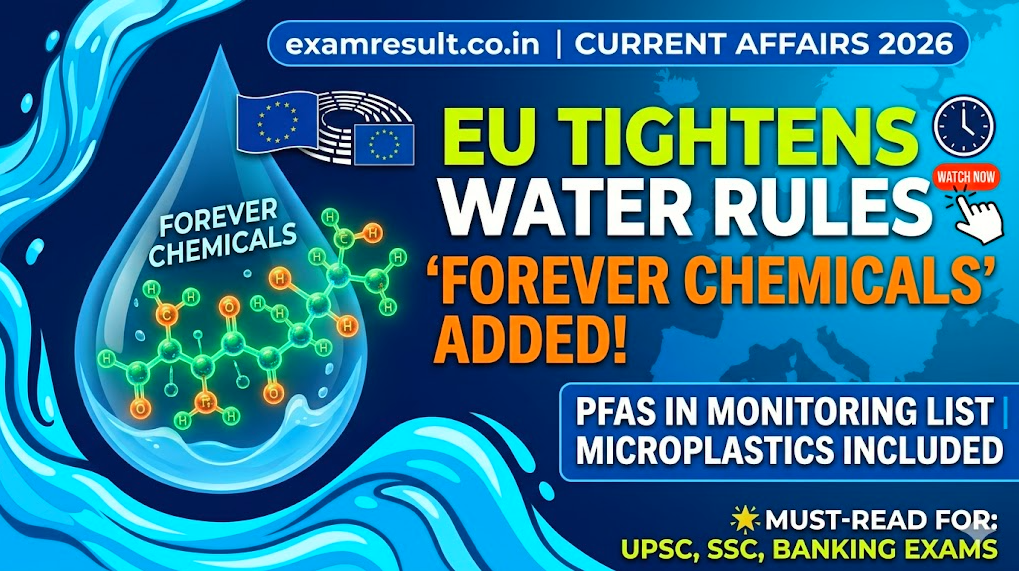
In a major environmental update in March 2026, the European Parliament took a significant step by revising the EU water pollution standards. Under this new legislation, PFAS (Per- and Polyfluoroalkyl Substances), commonly known as “Forever Chemicals”, have been officially added to the water pollution monitoring list.
For students preparing for competitive exams, this is a highly important current affairs topic, especially for the ‘Environment & Ecology’ and ‘Science & Technology’ sections. Let’s dive into the details of this new update and understand what PFAS are.
What are PFAS (Forever Chemicals)?
PFAS are a large, complex group of manufactured chemicals that include over 4,700 different compounds. They are notoriously referred to as “Forever Chemicals” because:
- They contain extremely strong Carbon-Fluorine bonds.
- They do not degrade (break down) easily in the environment or in the human body.
- They persistently bioaccumulate in the environment, wildlife, and human tissues over time.
Where are PFAS Found? These chemicals are heavily used in everyday products to make them resist heat, oil, stains, grease, and water. Common sources include non-stick cookware (like Teflon pans), water-resistant clothing, fast-food packaging, firefighting foams, and certain cosmetics. When waste from these products enters water bodies, it severely pollutes groundwater and rivers.
Key Highlights of the EU Water Pollution Directive 2026
The primary objective of the European Union’s updated directive is to protect freshwater bodies and groundwater sources. The key highlights include:
- Stricter Mandatory Monitoring: It is now mandatory for all EU member states to strictly monitor PFAS levels in both drinking water and surface water.
- Inclusion of Other Pollutants: Alongside PFAS, the new monitoring list also includes other emerging threats like Microplastics, Pharmaceuticals (medicinal waste), and Antimicrobial Resistance Indicators.
- Public Health Protection Actions: If the concentration of these chemicals exceeds the newly established limits, member states must take immediate remedial action. This could include closing contaminated wells or upgrading water treatment facilities.
- Zero Pollution Goal: This legislative update is a crucial component of the European Green Deal’s ‘Zero Pollution Action Plan’ and the broader ‘Water Resilience Strategy’.
Why is this Topic Important for Competitive Exams (UPSC, SSC, State PCS)?
Examiners frequently target emerging environmental and technological issues. Here is how questions might be framed:
- UPSC Prelims: Expect statement-based questions regarding the chemical properties of PFAS (especially the Carbon-Fluorine bond) and their bioaccumulation capabilities.
- SSC / Banking: Direct, one-liner questions may ask which international organization or region recently added PFAS to its monitoring list.
- Mains Examination: High probability of essay or descriptive questions on topics like “Water Pollution and Emerging Contaminants” or “The Threat of Microplastics and Forever Chemicals.”